
By John Patterson

In March 2026, global K-pop group BTS released an animated teaser for their upcoming album Arirang, inspired by the traditional Korean folk song that has existed in thousands of variations across generations. While the project aimed to honor cultural history and global connection, it quickly became the center of online controversy particularly surrounding its depiction of Howard University.
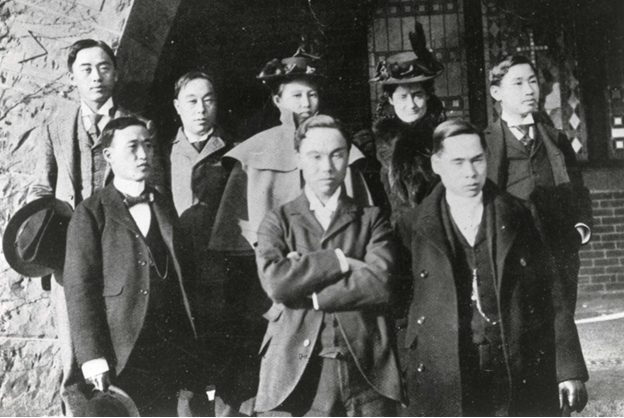
The teaser portrays seven Korean students arriving at Howard University over 130 years ago, highlighting a lesser-known historical narrative: the presence of Korean international students at a time when many U.S. institutions excluded non-European and non-white individuals.
At its core, the concept carries a meaningful intention recognizing cross-cultural solidarity and the role historically Black colleges and universities (HBCUs) have played in expanding access to marginalized communities worldwide.
However, what may have been intended as a tribute quickly drew criticism for how that history was visually represented.
Where the Backlash Began
Viewers and critics pointed out a major issue: the absence or near invisibility of Black students in the animated scenes of crowds on the Howard campus. For an institution like Howard University, whose identity is deeply rooted in Black excellence, culture, and community, this omission felt glaring.
Many described the imagery as a form of “whitewashing,” not necessarily in the literal sense of replacing characters with white figures, but in the broader context of erasing the very population that defines the institution. The campus appeared visually disconnected from its cultural and historical reality.
The controversy raises an important question: Can you honor a space without fully representing the people who give that space its meaning?
Intent vs. Impact
It’s possible, likely even, that BTS and their creative team intended to celebrate both Korean heritage and Howard’s history of inclusion. The narrative of Korean students finding opportunity at an HBCU during a time of widespread exclusion is powerful. It speaks to shared experiences of marginalization and resilience.
But intention does not erase impact.
The video was meant to reference a real historical moment when Korean students at Howard recorded traditional music in the late 1800s. The university itself highlighted the video for this reason. However, the teaser sparked backlash because many viewers felt it inaccurately portrayed the university. Critics pointed out that the animation showed very few Black students, even though Howard is a historically Black institution, leading to accusations of “whitewashing.” The university’s promotional story also noted how this depiction of Howard shows “the need for cultural sensitivity and historical accuracy even when intentions are positive.”
While BTS likely intended to honor a shared cultural history, many fans and members of the HBCU community saw the depiction as disrespectful and a missed opportunity to properly represent Black culture and history. Additionally, the criticism connects to larger conversations about K-pop’s relationship with Black culture, with some arguing that the situation reflects ongoing concerns about cultural appreciation versus appropriation.
Why Representation Matters Especially Here
HBCUs like Howard are not just academic institutions; they are cultural landmarks. They were created as spaces for Black education, empowerment, and resistance in a system that historically denied those opportunities.
To depict Howard without centering Black presence is to misunderstand what the institution represents.
This moment highlights a broader issue in global media: the challenge of telling cross-cultural stories responsibly. As artists like BTS continue to expand their global influence, their work increasingly intersects with histories and communities beyond their own. With that reach comes a responsibility to engage those histories with care, research, and authenticity.
Moving Forward
The controversy surrounding Arirang does not have to end in division. Instead, it can serve as a learning moment both for artists and audiences.
For creators, it’s a reminder that representation is not just about inclusion, but accuracy and respect. For fans and critics, it opens space for deeper conversations about cultural exchange, historical storytelling, and who gets to be visible in those narratives.
BTS has built a career on messages of connection, identity, and social awareness. This moment challenges them and the broader entertainment industry to live up to those values on a global stage.
Because when you tell a story rooted in history, every detail matters. And sometimes, what’s missing speaks louder than what’s shown.
